


Background
The world’s population is ageing rapidly, with the proportion of people over 60 expected to almost double by 2050. At the same time, life expectancy for people with disabilities has increased significantly, creating unique challenges for health and social care. Ageing with a disability often leads to premature health decline and increased vulnerability to secondary conditions. Despite shared risks with the general ageing population, gaps remain in service design and professional skills. The GOLD project aims to equip disability and geriatric care professionals and informal carers with the tools to anticipate risks and ensure quality support for ageing people with disabilities.
E-learning Course: Support for Ageing Persons with Disabilities
The GOLD project will launch a blended learning (b-learning) training course designed to empower professionals and volunteers working with ageing adults with disabilities. This course combines specialist knowledge in the fields of disability and gerontology, promoting a holistic, inclusive and rights-based approach.
Introducing the WP3 E-learning Course
The course will be available through the Aproximar Capacita platform, integrating:
- Synchronous sessions (during the pilot period);
- Asynchronous content with access to theoretical and support documentation;
- Interactive resources (exercises, articles and audiovisual materials)
- Assessment questionnaires at the end of each module
The training has a total duration of 20 hours, spread over 5 thematic modules, including an opening session and a final workshop. Available in English, French, Portuguese, Romanian, German and Italian, the course allows for flexible learning, while promoting moments of interaction and practical application.
Course Highlights
- Identifying signs of ageing in people with disabilities
- Applying a rights-based and self-determination approach
- Supporting life transitions and adapting environments and activities
- Recognising and managing ethical dilemmas in direct intervention
- Developing communication skills with families and multidisciplinary teams
- Supporting end-of-life and bereavement processes in a sensitive and inclusive manner
The content is organised into five modules:
- Signs of Ageing
- Rights, Self-determination and Access to Healthcare
- Management of Transitions and Adaptation of Activities and Environment
- End of Life and Death
- Communication, Relationships and Networks
This course represents a unique opportunity to strengthen technical and practical skills, promoting a more conscious, ethical and person-centred approach.
Stay tuned to our social media channels to register for this training course.
TOT PORTUGAL
In January 2026, Aproximar hosted the GOLD project’s Transnational Training of Trainers (TOT) in Lisbon, bringing together partners from Portugal, Italy, Romania, France, Belgium, and Austria.
This meeting marked a key moment in the project, allowing the b-learning course developed under WP3 to be tested and validated. Over three days, partners and professionals in the fields of disability and ageing explored the training platform, analysed the modules and tried out the digital activities, providing essential technical and pedagogical feedback for the improvement of the course.
The TOT also included a visit to CERCICA in Cascais, where participants had the opportunity to learn first-hand about the reality of ageing people with disabilities. Reflection on the question ‘Our residents are ageing — is it time to rethink social responses?’ stimulated a rich debate on innovative practices, emerging needs and support strategies.
More than just a training session, the TTL was a real space for transnational sharing, reinforcing the link between theory and practice and consolidating the next steps of the GOLD project.
Local Events for Course Testing
Across each participating country, local events will be held to showcase, evaluate, and further refine the E-learning Course, the newly developed training programme. These events will provide the opportunity to evaluate the programme in real-world settings, gather feedback and make improvements.
Experienced trainers, having taken part in the transnational pilot training, Training of Trainers, will work closely with partner organizations to ensure these events are successfully delivered and tailored to local needs.
At least 160 professionals and volunteers from the healthcare and support sectors, including those working in disability and geriatrics, will participate in local events to become familiar with the programme and trained. These local testing events will engage professionals and volunteers working with — or likely to work with — older people with disabilities, including educators, social workers, care assistants, paramedical staff and coordinators of institutions or services, ensuring the programme’s proper validation.
All partner organizations are set to host the local events, in terms of test trainings and workshops, in their respective countries, in order to test and validate the contents produced by the GOLD consortium, including France, Romania, Italy, Austria, Belgium and Portugal. This collaborative effort aims to strengthen capacity, share best practices and maximize the GOLD programme’s effectiveness.
Next Steps & European Event
GOLD awareness-raising campaign is being conducted through both local and transnational events to promote the project outputs, providing valuable information to professionals and operators in the field.
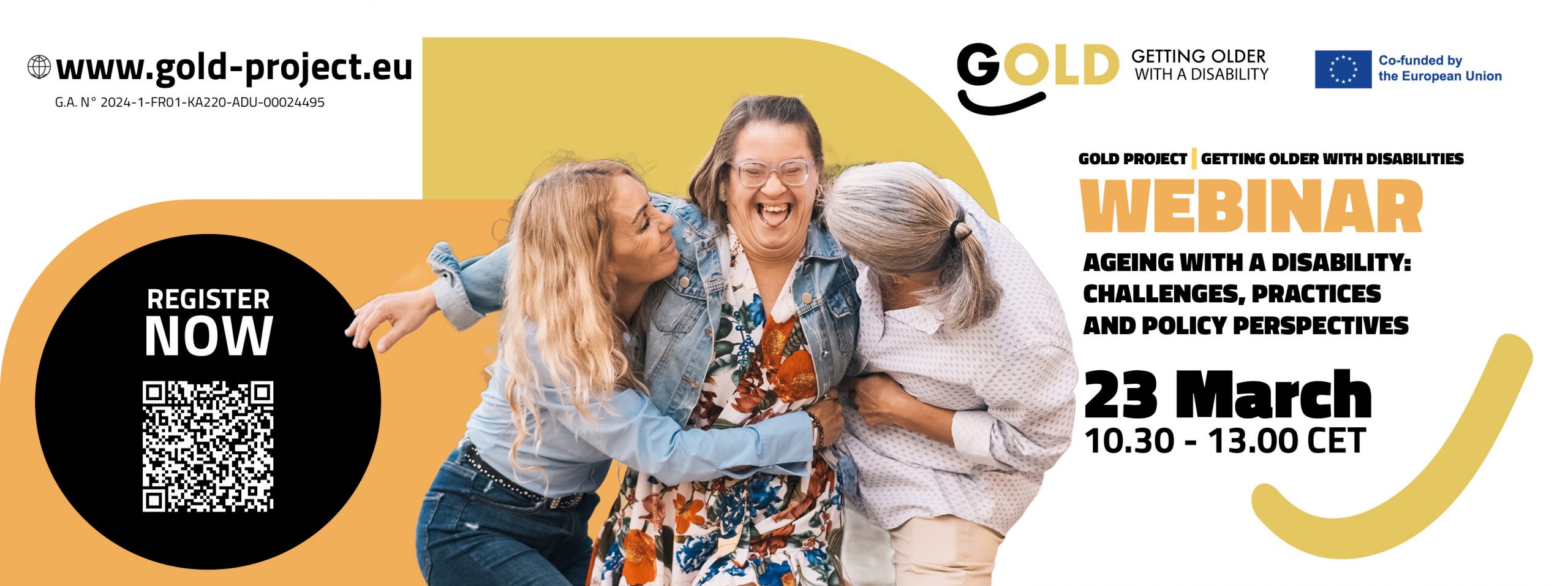
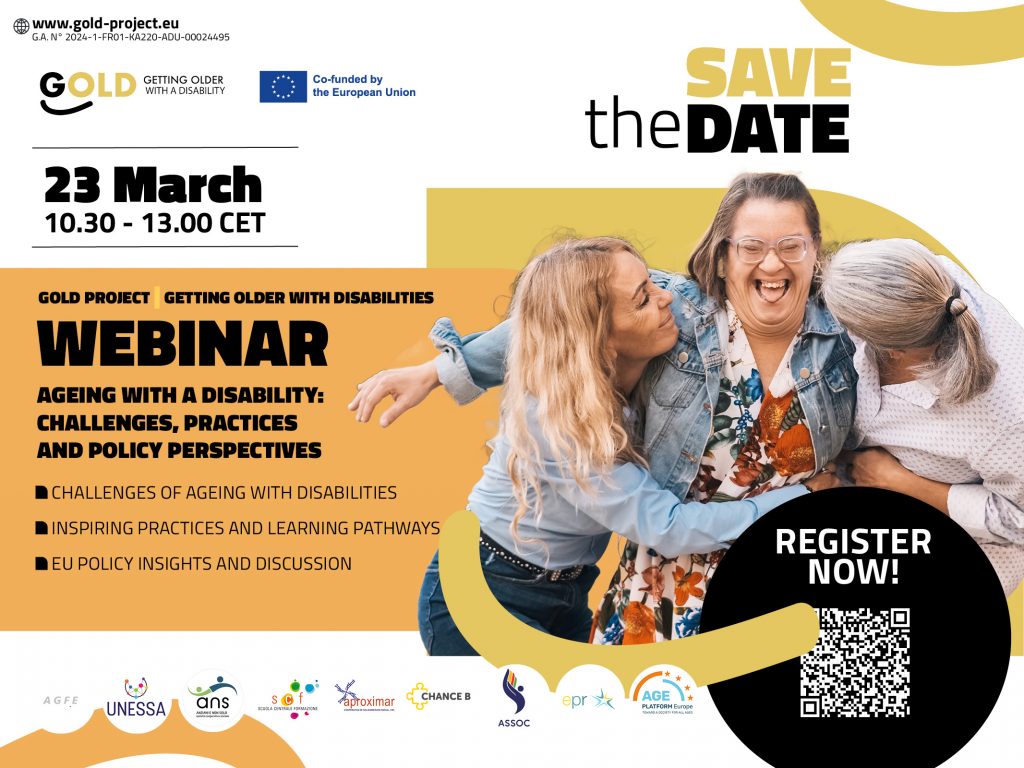
Speaking of transnational events, the upcoming European Event will take the form of a seminar conducted via videoconference, designed to collect expert recommendations and foster further collaboration to shape the future of the project.
Follow GOLD:
For updates, resources, and news, visit GOLD website and follow us on social media using #GOLD_EU_PROJECT.
This newsletter is available in:
English
French
Italian
Romanian
German
Portuguese